
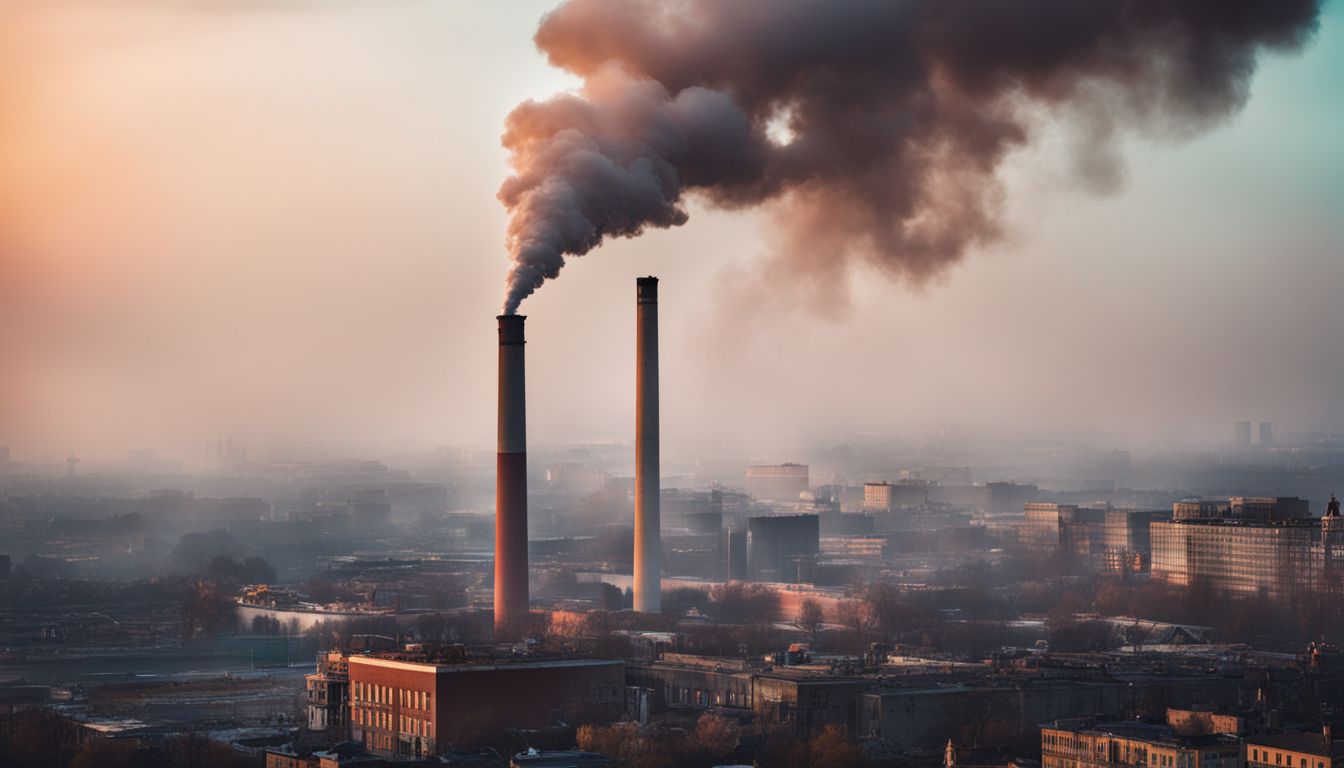
Are you tired of the irritating smoke and smog that continually invades your home? Did you know that air purifiers have been used to combat such issues? From explaining how they work to selecting the best purifier for your needs, this blog post is a comprehensive guide on effectively keeping pollutants at bay.
Let’s unveil the secret to breathing easier at home!
Understanding Smoke and Smog

Smoke and smog are harmful pollutants that can have detrimental effects on air quality, causing respiratory health issues and contributing to environmental pollution.
Causes and effects
Smoke and smog hurt our lungs. They are a form of air pollution that comes from cars, factories and other places. Smoke is made up of tiny bits called particulate matter that can make us cough or feel sick.
Smog is worst in busy cities where lots of people live and work. It causes heart problems, asthma and other lung diseases. Research shows that one-third of deaths from heart disease, stroke, and lung cancer happen because of air pollution like smog or smoke.
Our air quality gets worse when there’s more smoke and smog—this is bad for everyone’s health!
How it affects air quality
Smoke and smog make the air dirty. They harm the air quality. Air laden with these pollutants is not good for us to breathe in. It makes us sick more often. Even it can lead to death in severe cases, as per reports.
Smoke and smog also play a role in warming our planet. They help to create dangerous ground-level ozone — another bad form of pollution which harms both humans and nature alike.
How to Keep Smoke and Other Air Pollutants Out of Your Home
To keep smoke and other air pollutants out of your home, ensure proper ventilation, regularly clean your living space, and use air purifiers.
Proper ventilation
Open windows and doors when the air outside is clean. This lets fresh air flow into your home. It pushes out any bad, stale indoor air. This process is called proper ventilation. It helps to cut down on smoke, smog and other pollutants in your home’s air.
Be sure not to do this when the outdoor air is polluted or during a wildfire because it can make things worse! Fans can also help with moving clean air around your home.
Regular cleaning
Regular cleaning helps keep the air fresh in your home. Dust and dirt pile up over time. They can make the air dirty if not cleaned often. Use a wet cloth to wipe surfaces. It picks up dust better than dry ones.
Vacuum carpets and rugs at least once a week. This sucks up dirt that may spoil the air quality in your home. Clean out vents too, so they don’t blow back collected dust into rooms.
Use of air purifiers

Air purifiers play a big role in combating smoke and smog.
- They scrub the air clean. Air purifiers pull in dirty air from your room. Then, they remove harmful particles.
- They use filters. Some filters are HEPA or high-efficiency filters. They trap tiny bits that we can’t see.
- There are also carbon filters in some air purifiers. They help to catch smoke and other smells.
- Some purifiers have ionizers, too. These make the bad bits stick together, so it’s easier to catch them.
- The use of PECO technology is another way that air purifiers fight polluted air.
- Certain air purifier models are best for wildfire smoke control.
- Air purifiers can pick up bacteria, viruses, fungal spores, and mould spores from the indoor air to improve its quality.
- To keep your health well, it is recommended to also use masks and car filters in addition to using an air purifier.
- For best results, put the air purifier in a place where everyone spends most of their time, like the living room or bedroom.
- Supporting efforts to reduce pollution is important, along with using an air purifier for clean indoor air quality.
Choosing the Best Air Purifier to Combat Smoke and Smog
When selecting an air purifier to combat smoke and smog, consider key features such as HEPA filters, carbon filters, ionizers, and PECO technology. Additionally, take into account specific considerations for combating wildfire smoke.
HEPA filters
HEPA filters are a top choice for air purifiers. They catch very small things from the air. This helps clean smoke, smog and more. Dust, mould spores, pet hair and even tiny bugs can’t escape them.
HEPA filters give you clean and safe air in your home. If you live where there’s a lot of wildfire smoke or highway pollution, an air purifier with a HEPA filter is good to have.
Carbon filters
Carbon filters play a key role in air purifiers. They work by trapping and holding smoke, fumes, and odours. Bad smells from smoke or chemicals stick to the carbon. The dirty air moves through the filter, but only clean air comes out.
This helps keep your room’s air fresh and free from bad smells. If you live where there is wildfire smoke or heavy smog, an air purifier with a carbon filter can help make breathing easier for you.
Ionizers
Ionizers are a type of air purifier that works by releasing negatively charged ions into the air. These ions attach themselves to particles like dust, smoke, and allergens, causing them to become heavy and fall out of the air.
This helps to improve indoor air quality by reducing the number of pollutants floating around. Ionizers can be especially effective at removing odours from smoke and other sources. However, it’s important to note that ionizers may also produce small amounts of ozone as a byproduct, which could potentially irritate the lungs for some individuals with respiratory sensitivities or conditions.
Overall, using an ionizer in combination with other filtration methods can help combat smoke and smog in your home or office space. It’s always a good idea to research different models and consider any potential health concerns before making a purchase decision.
PECO technology
PECO technology, or Photo Electrochemical Oxidation, is an advanced air purification system that goes beyond traditional methods. It uses a combination of UV light and a catalyst to destroy pollutants at the molecular level.
Unlike other filters, PECO technology can effectively remove not only particulate matter like dust and smoke but also gases and volatile organic compounds (VOCs). This makes it highly effective in combating smoke and smog by eliminating harmful particles and chemicals from the air you breathe.
With PECO technology, you can enjoy cleaner indoor air and reduce your exposure to pollutants that can harm your respiratory health.
Considerations for wildfire smoke
Wildfire smoke can be a major concern for air quality, especially in areas prone to wildfires. When choosing an air purifier to combat wildfire smoke, it’s important to consider a few factors.
Look for a purifier with a high-efficiency particulate air (HEPA) filter, as these filters are effective at capturing small particles like those found in smoke. Additionally, considering the size and coverage area of your space is crucial, as you’ll want an air purifier that can effectively clean the air in your room or home.
Lastly, keep in mind the noise level and energy consumption of the air purifier to ensure it meets your needs.
Other Ways to Reduce Exposure to Smoke and Smog
– Avoid outdoor activity in high-pollution areas.
– Use masks and air filters in your car.
– Support efforts to reduce pollution.
Avoiding outdoor activity in high-pollution areas
To reduce your exposure to smoke and smog, it is best to avoid spending time outdoors in areas with high pollution levels. This can help protect your respiratory health and minimize the risk of inhaling harmful pollutants. Instead, choose indoor activities or find locations with cleaner air. If you must go outside, consider checking air quality indexes to determine if it’s safe to venture out.
Using masks and air filters in your car
To reduce your exposure to smoke and smog while driving, there are a few things you can do. Here are some tips:
- Wear a mask designed to filter out particles. This can help protect your lungs from harmful pollutants in the air.
- Consider using an air filter in your car. These devices can help remove pollutants from the air inside your vehicle.
- Look for air filters that have high-efficiency filters or HEPA filters. These types of filters are designed to capture small particles, including smoke and smog.
- Carbon filters are also effective at removing odours and chemicals from the air, so they can be a good option for combating smoke and smog.
Supporting efforts to reduce pollution
We can all play a part in reducing pollution and improving air quality. One way to support these efforts is by advocating for stricter regulations on industrial emissions and vehicle exhaust.
Encouraging the use of renewable energy sources and promoting sustainable transportation options can also make a difference. Planting trees, which absorb carbon dioxide and release oxygen, can help combat pollution as well.
Additionally, educating ourselves and others about the importance of reducing pollution is crucial for creating long-term change.
Conclusion
In conclusion, air purifiers play a vital role in combating smoke and smog by removing harmful pollutants from the indoor air. They can effectively reduce allergens, bacteria, mould spores, and viruses, improving respiratory health.
By choosing the right air purifier with technologies like HEPA filters and carbon filters, we can create cleaner and healthier living environments. So, let’s prioritize clean air and protect ourselves from the negative effects of smoke and smog with the help of air purifiers.
FAQs
1. How do air purifiers combat smoke and smog?
Air purifiers combat smoke and smog by filtering the air and removing harmful particles and pollutants such as smoke particles, dust, pollen, and chemicals.
2. Are air purifiers effective in reducing indoor smoke pollution?
Yes, air purifiers are effective in reducing indoor smoke pollution by removing smoke particles from the air, helping to improve indoor air quality.
3. Can an air purifier remove the smell of smoke?
Yes, an air purifier can help remove the smell of smoke by capturing the odorous particles that cause it and circulating clean air back into the room.
4. What types of filters are best for combating smoke and smog with an air purifier?
HEPA (High-Efficiency Particulate Air) filters are considered highly effective at capturing small airborne particles like those found in smoke and smog. Activated carbon filters can also help mitigate odour concerns associated with these pollutants.
5. Can I use an air purifier to reduce outdoor smog exposure indoors?
Yes, using an air purifier with a HEPA filter can help reduce outdoor smog exposure indoors as it captures fine particulate matter present in smog and prevents it from entering your living space.